
A slewing bearing—often called a slewing ring bearing—is the core rotating component that connects fixed and moving parts of heavy machinery, enabling smooth 360-degree rotation while bearing axial, radial and moment loads. Whether you’re sourcing for construction cranes, aerial work platforms, wind turbines, excavators, industrial robots or marine equipment, selecting the right slewing bearing directly determines equipment stability, service life and operational safety. A mismatched slewing bearing can lead to premature wear, structural failure, costly downtime and even safety hazards. This comprehensive guide walks you through the critical factors to pick the perfect slewing bearing for your unique application, avoiding common purchasing mistakes and ensuring long-term reliability.
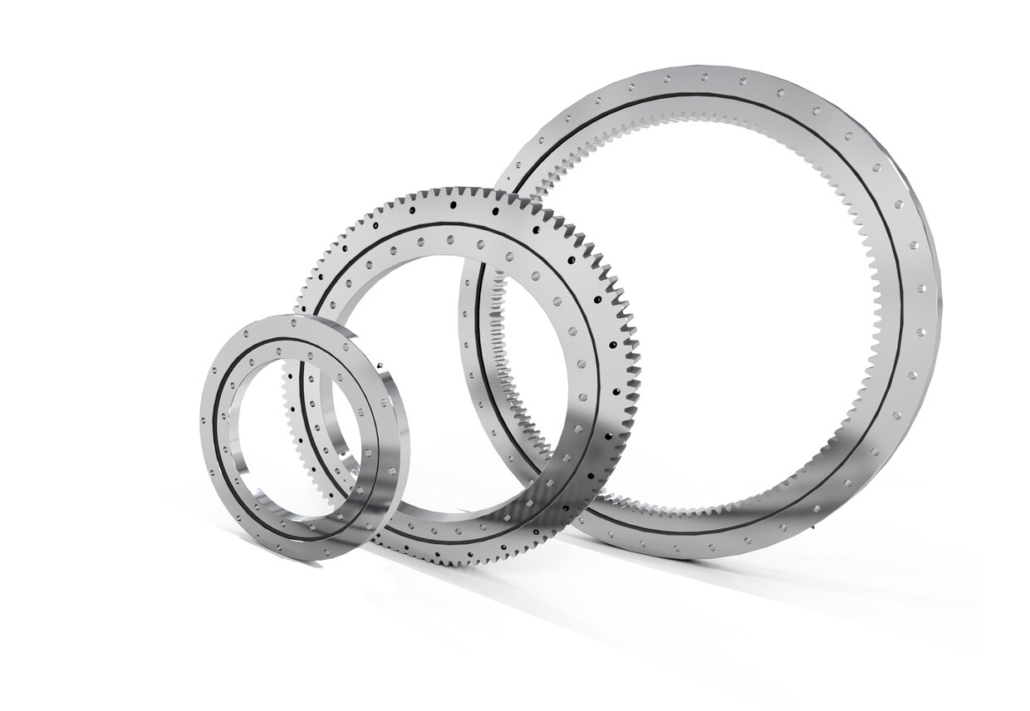
1. Analyze Load & Force Requirements (The Top Priority)
Load characteristics are the foundation of slewing bearing selection, as every slewing bearing is engineered to handle specific load types and magnitudes. Start by calculating three key force metrics: axial load (vertical force), radial load (horizontal force) and overturning moment (tilting force). You must also distinguish between static load (stationary equipment) and dynamic load (operating, starting, stopping or shock conditions).
For light-to-moderate load applications (e.g., small conveyors, medical equipment), single-row four-point contact ball slewing bearings are a cost-effective choice. For heavy-duty, high-moment scenarios (e.g., large cranes, mining machinery), three-row roller slewing bearings or double-row ball bearings deliver superior load capacity and rigidity. Always verify the bearing’s rated load against your actual working load spectrum, and leave a reasonable safety margin to account for unexpected shocks or environmental stress.
2. Match Slewing Bearing Type to Application Scenario
Slewing bearings come in diverse designs to fit different operational needs, and choosing the right type eliminates performance waste and overspending. Here’s a quick breakdown of common types and their best uses:
- Four-Point Contact Ball Slewing Bearings: Ideal for moderate loads, compact spaces and intermittent rotation; widely used in truck cranes, lifting platforms and packaging machinery.
- Crossed Roller Slewing Bearings: Offer high precision and rigidity, perfect for high-accuracy applications like robotics, radar systems and precision machining equipment.
- Three-Row Roller Slewing Bearings: Built for extreme heavy loads and harsh working conditions; dominant in large excavators, port machinery and wind power generators.
- Light-Duty Slim Slewing Bearings: Designed for small-scale equipment with limited installation space, such as medical devices and automated assembly lines.
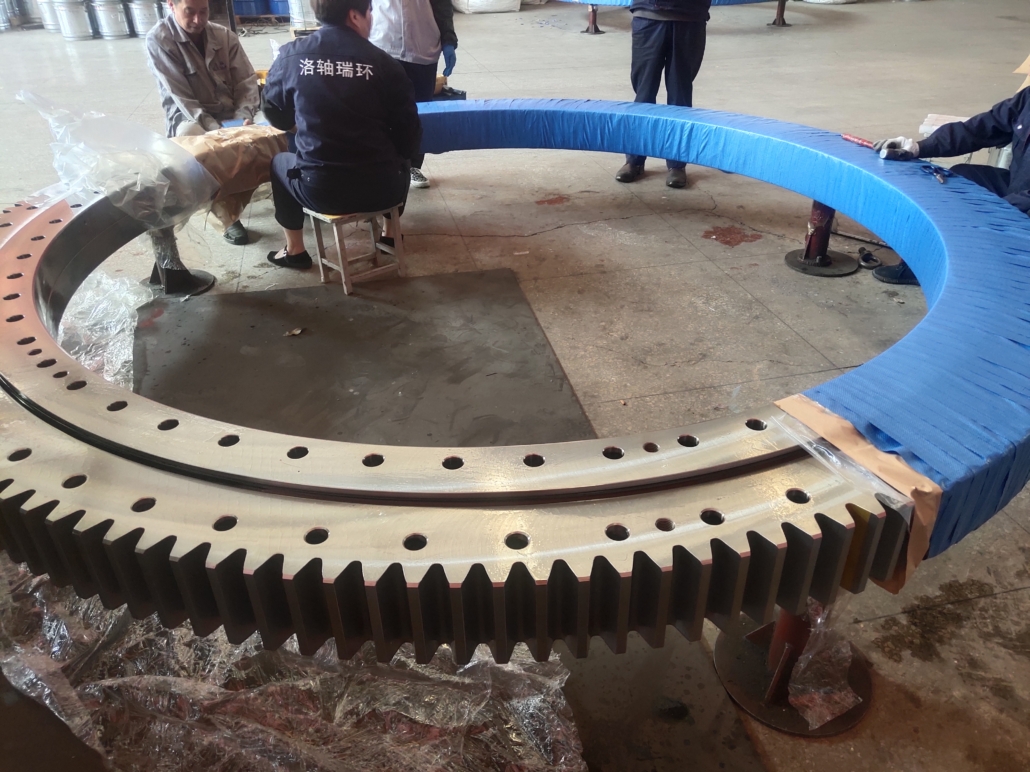
3. Confirm Size, Installation Space & Gear Parameters
Size compatibility is non-negotiable for seamless installation and performance. Measure the inner diameter, outer diameter, height and mounting hole spacing of your equipment to ensure the slewing bearing fits perfectly. Pay close attention to the central bore size, as it often houses hydraulic lines, cables or transmission components.
If your equipment requires geared rotation, choose between internal gear, external gear or non-gear slewing bearings. Check gear module, tooth hardness and backlash to match your drive system (motor, reducer) for smooth power transmission and minimal noise. Improper gear matching will cause accelerated wear and reduced transmission efficiency.
4. Evaluate Material, Heat Treatment & Durability
The quality of raw materials and heat treatment directly impacts the slewing bearing’s wear resistance, fatigue life and load capacity. Premium slewing bearings are typically forged from high-strength alloy steels like 42CrMo (4140) or 50Mn, with quenched and tempered raceways and gears to enhance hardness and toughness. Avoid low-quality carbon steel bearings, as they are prone to cracking, deformation and premature failure under heavy loads.
For long service life, prioritize slewing bearings with fine grinding, strict dimensional accuracy and uniform material composition. Reputable manufacturers conduct full-process quality testing, including ultrasonic flaw detection and hardness testing, to ensure structural integrity.
5. Consider Environmental Conditions & Sealing Performance
Harsh environments—dust, moisture, corrosion, extreme temperatures or chemical exposure—will drastically shorten a slewing bearing’s lifespan if not properly protected. Evaluate your operating environment and select a slewing bearing with suitable sealing solutions:
- Standard labyrinth seals: For dry, indoor industrial environments.
- Double-lip rubber seals: Block dust, water splashes and mild contaminants; ideal for outdoor construction equipment.
- Corrosion-resistant coatings/stainless steel bearings: For marine, coastal or chemical environments to prevent rust and oxidation.
Also confirm the bearing’s operating temperature range to ensure stable performance in extreme cold or heat.
6. Check Precision, Rotation Speed & Maintenance Needs
High-precision applications (robotics, radar, optical equipment) require slewing bearings with minimal backlash and tight dimensional tolerances. For high-speed rotation, choose low-friction bearing designs to reduce heat generation and energy consumption; slow, intermittent rotation allows for standard precision bearings.
Maintenance accessibility is another key factor. Lubrication groove design, grease filling ports and seal replaceability will simplify routine upkeep and extend the bearing’s service life. For hard-to-reach equipment, consider maintenance-free slewing bearings with pre-lubricated, sealed designs.
Common Mistakes to Avoid When Choosing a Slewing Bearing
- Ignoring dynamic load and shock factors, only relying on static load data
- Choosing oversized bearings to cut costs (wastes space and increases energy consumption)
- Sacrificing material quality for a lower upfront price (leads to higher long-term replacement costs)
- Overlooking sealing and environmental adaptability (causes premature failure in harsh conditions)
Final Thoughts: Partner with a Reliable Slewing Bearing Supplier
Selecting the right slewing bearing is a systematic process that balances load, size, environment, precision and budget. Even with thorough research, partnering with an experienced, certified slewing bearing manufacturer ensures you get customized solutions, professional technical support and quality-guaranteed products. A trusted supplier will help you calculate load parameters, recommend the optimal bearing type and provide after-sales support to maximize your equipment’s performance and ROI.
Don’t let a poor slewing bearing choice compromise your machinery’s efficiency. Use this guide to make informed decisions, and invest in a high-quality slewing bearing that delivers consistent, reliable rotation for years to come.


